

The Line Has Been Crossed
So what has changed?
Put simply, the federal government, under President Donald Trump, has made itself my enemy — the enemy of everything I hold dear, everything I value, everything I thought this country was supposed to stand for.
It’s that serious.
Every day I wake up and there is something new. Something worse. Something I would not have believed possible even a few years ago. And every day I feel it again — the anger, the disbelief, the sense that something fundamental is breaking, right in front of us.
And I warn. I have warned. I have written, and talked, and argued, and tried to make the case.
But who am I talking to?
Mostly people who already agree with me.
And what has it changed?
That’s the question that keeps coming back. That’s the question that doesn’t go away.
Because more and more, it feels like nothing.
Like I am doing nothing.
Nothing public enough to matter. Nothing risky enough to count. Nothing that actually interferes with what is happening.
Like Rick, in Casablanca, I have been sticking my neck out for nobody.
I’m done with that.
I’m done with being a Good American in the passive, obedient sense of the term. Done with financing, through habit and inertia, a government that I believe is doing profound and lasting harm.
More Than Protest
I have seen online chatter about a tax revolt this year. I’ve followed some of it. I’ve looked into it.
I’ve also argued, more than once, that if people are serious about stopping what is happening in this country, then economic action is where the real leverage lies.
Protests matter. They do. They show who we are. They show that people care, that people are paying attention, that there is still something decent and alive in the body of this country.
But they have not stopped this.
They have not slowed it.
And every time people gather peacefully, there is always that shadow hanging over it — the possibility that it turns, that it gets provoked, that it becomes the excuse for the kind of crackdown that authoritarian governments are always waiting for.
So if not protest… then what?
If not words… then what?
Because words, as much as I believe in them, are not stopping this.
A Sovereign Taxpayer
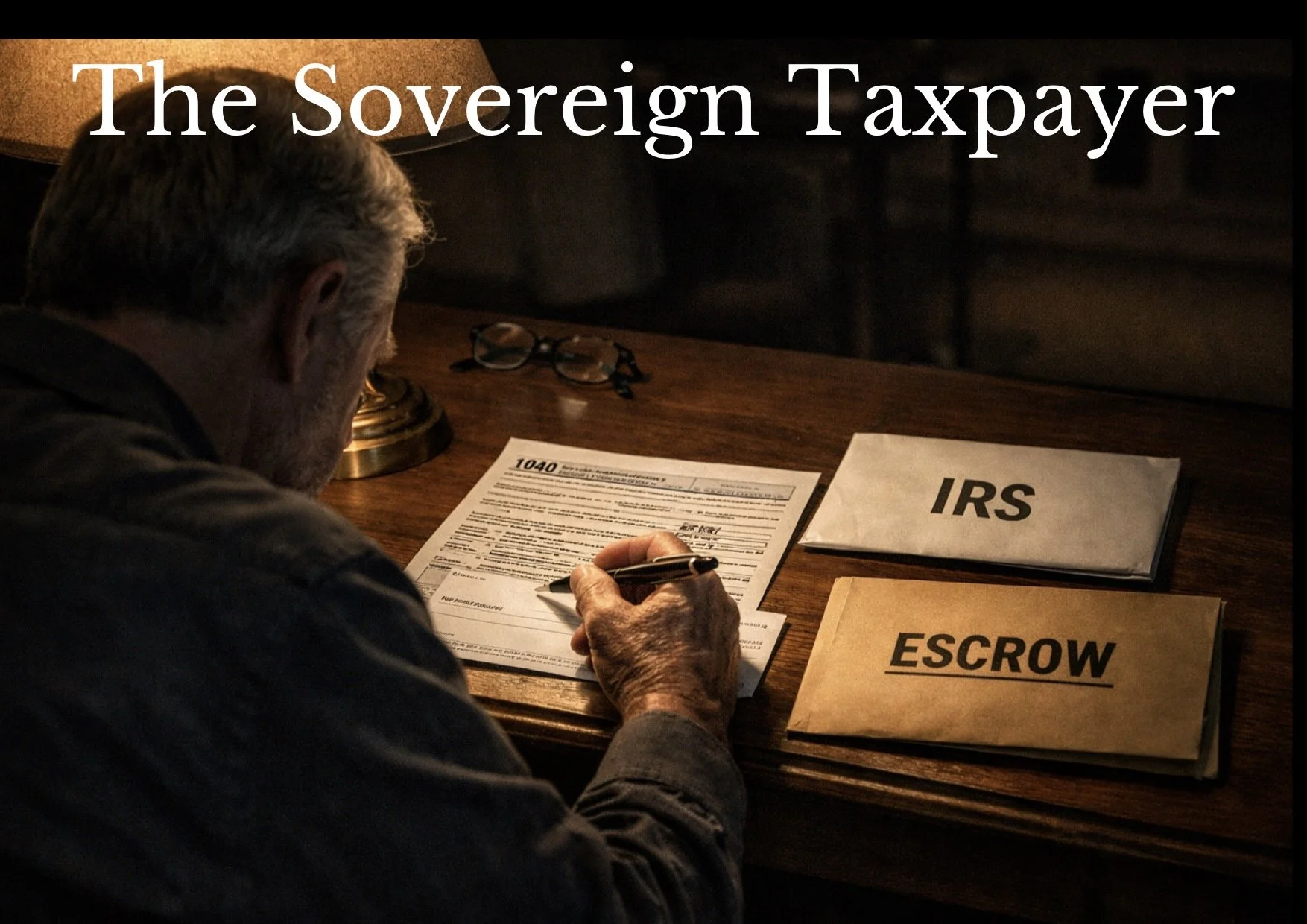
What if millions just said No and opened escrow accounts?
I’ve been wending my way toward the exit of the TurboTax fun house, as I do every year in preparation to send the US Treasury and the California Franchise Tax Board what my partner and I wind up owing as law-abiding taxpayers.
It turns out I owe a fair amount this year, as none of my income comes from W-2s or has otherwise been subject to withholding.
I have decided not to pay it, and I am writing this column to explain why.
Let me begin by stating that this has been a very difficult decision. I’ll be 70 next year and I have always paid my taxes, in full, on time — even in years when I passionately objected to what the government was doing with my check.
Like when George W. Bush invaded Iraq and rammed through the Patriot Act along with massive tax cuts for corporations and the rich. I grumbled, I complained, I even yelled. But I sent. I always sent.
Because taxation — however determined and apportioned, and however spent — is fundamental to the compact that binds us into a nation. It is, in a sense, the price of representation.
In our form of democracy, both our voice and our funding are mediated, indirect. We vote for the leaders we believe represent our values and priorities and we fund the project as they devise it, holistically, as one big package. Anything else — picking and choosing, consenting and refusing — would spell chaos.
I have believed that my entire adult life.
More Than Protest
I have seen online chatter about a tax revolt this year. I’ve followed some of it. I’ve looked into it.
I’ve also argued, more than once, that if people are serious about stopping what is happening in this country, then economic action is where the real leverage lies.
Protests matter. They do. They show who we are. They show that people care, that people are paying attention, that there is still something decent and alive in the body of this country.
But they have not stopped this.
They have not slowed it.
And every time people gather peacefully, there is always that shadow hanging over it — the possibility that it turns, that it gets provoked, that it becomes the excuse for the kind of crackdown that authoritarian governments are always waiting for.
So if not protest… then what?
If not words… then what?
Because words, as much as I believe in them, are not stopping this.
Pay for This?
I am not naive. I do not expect that masses of people will suddenly follow my lead.
This is not about that.
This is about conscience.
It is about whether I can continue to do what I have always done — send my money, year after year, without question — when I no longer believe in what that money is supporting.
Can I do that?
Can I knowingly contribute to something I believe is reckless, destructive, and in many cases unconscionable?
I keep coming back to that question.
And I don’t have a way around it.
Because when I look at what is happening — the erosion of civil liberties, the expansion of detention systems, the dismantling of environmental and public health protections, the corruption of institutions that are supposed to serve the public — I cannot pretend that this is just politics as usual.
It doesn’t feel like that.
It feels different.
It feels worse.
Now we are told there is endless money for militarization, but not enough for the basic structures that allow people to live with dignity — health care, child care, education, stability.
We are told this is necessary.
We are told this is normal.
It is not normal.
It is not reasonable.
It is, to put it plainly, insane.
And I am supposed to pay for it.
We Have Leverage, Real Leverage
This is a country that runs on money. A system that runs on money. A presidency that, more than anything else, understands money.
So what happens if the money stops flowing?
Even a little?
Even imperfectly?
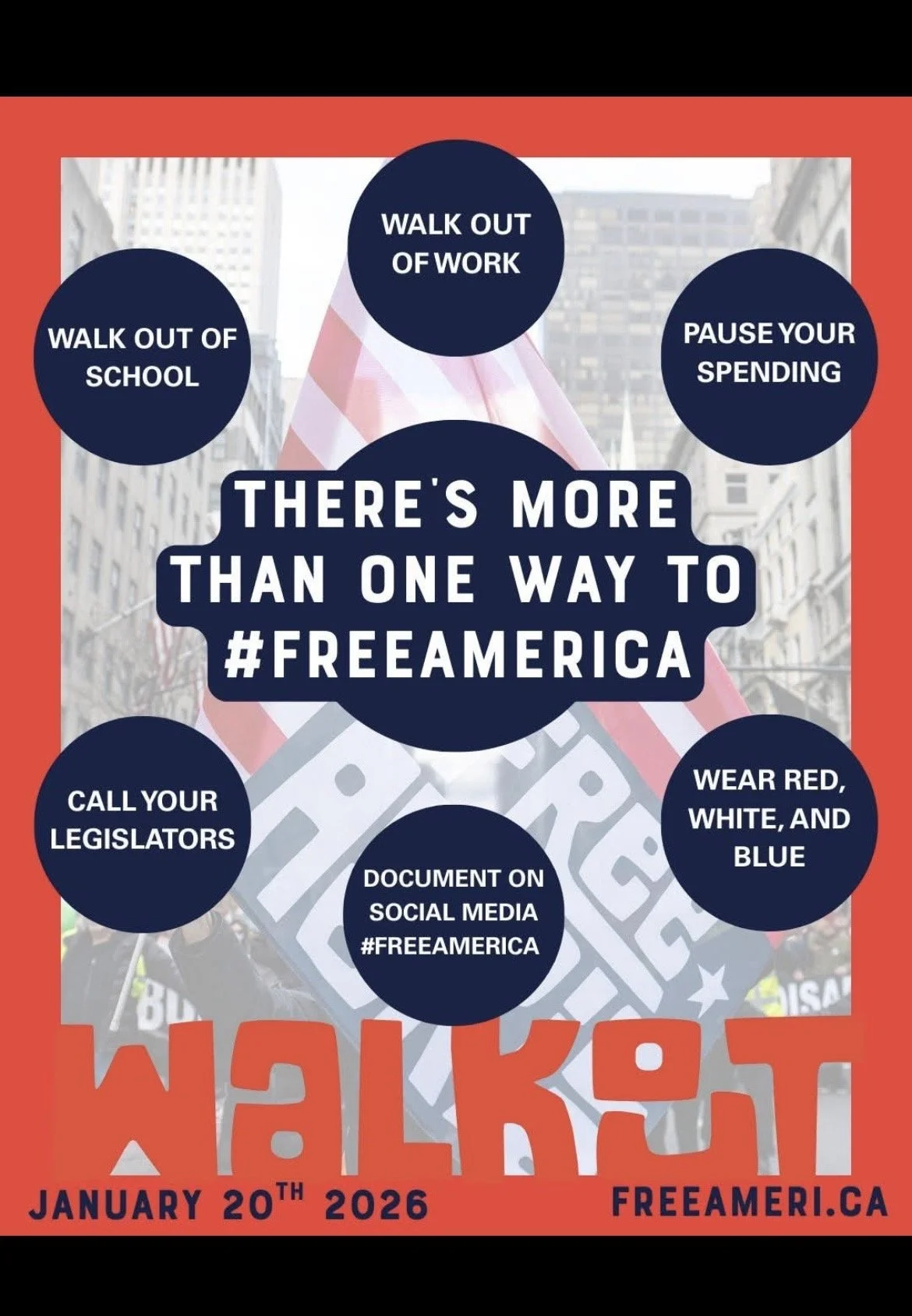
Boycotts. Strikes. Tax resistance.
Of these, tax resistance is the most direct — and the most difficult.
It requires people to step out of line. To take a risk. To accept consequences.
Which is exactly why it has power.
And that is where I find myself now.
Because I have become increasingly uncomfortable — ashamed, if I’m being honest — of urging others to act while I remain safely within the lines myself.
So this is me stepping out.
The Plan
Here is what I am going to do.
I will pay my state taxes, as I always have.
I will take the money I would ordinarily send to the US Treasury and place it into a separate escrow account.
It will sit there until January 21, 2029 — or until someone other than Donald J. Trump occupies the White House.
Sooner or later, the IRS will come asking.
When they do, I will tell them exactly where the money is, and exactly why it is there.
And then we will see what happens.
I understand the risks. I understand the likely consequences.
If I am forced to pay later, with interest and penalties, so be it. I will pay it — to a government I can, at minimum, recognize as legitimate.
But I will not willingly fund what I believe is happening now.
The Die Has Been Cast
At this scale, what I am doing has no practical effect.
I know that.
But I also know I am not the only one who feels this way.
There are people all over this country who are angry, who are exhausted, who feel that something has gone deeply wrong — and who are still, out of habit or fear or uncertainty, continuing to comply.
Maybe that continues.
Maybe it doesn’t.
There is a belief among some that this will burn itself out. That it will collapse under its own weight. That the system will correct itself, as it always has.
Maybe.
But maybe not.
And I am no longer willing to bet everything on “maybe.”
Because what we are facing is not just a set of policies we disagree with. It is a concentration of power that is increasingly indifferent to limits, to norms, to consequences.
And if those limits fail… then what?
No one wants that answer.
But we don’t get to avoid the question.
The only real choice left is how we respond.
What we are willing to risk. What we are willing to do. What line we are willing to draw for ourselves.
Embraced at scale, the withholding of federal tax payment is a nonviolent form of resistance that applies pressure where it matters most.
It is not easy. It is not safe. It is not guaranteed to work.
But it is something.
And at a certain point, something matters more than nothing.
As Merry reminds Frodo near the end of The Lord of the Rings, “You won’t rescue the Shire just by being shocked and sad.”
Neither will we.